ITTF 2026 World Team Championships London Most Important Century

By: Simon
April 28, 2026 | Updated: June 23, 2026


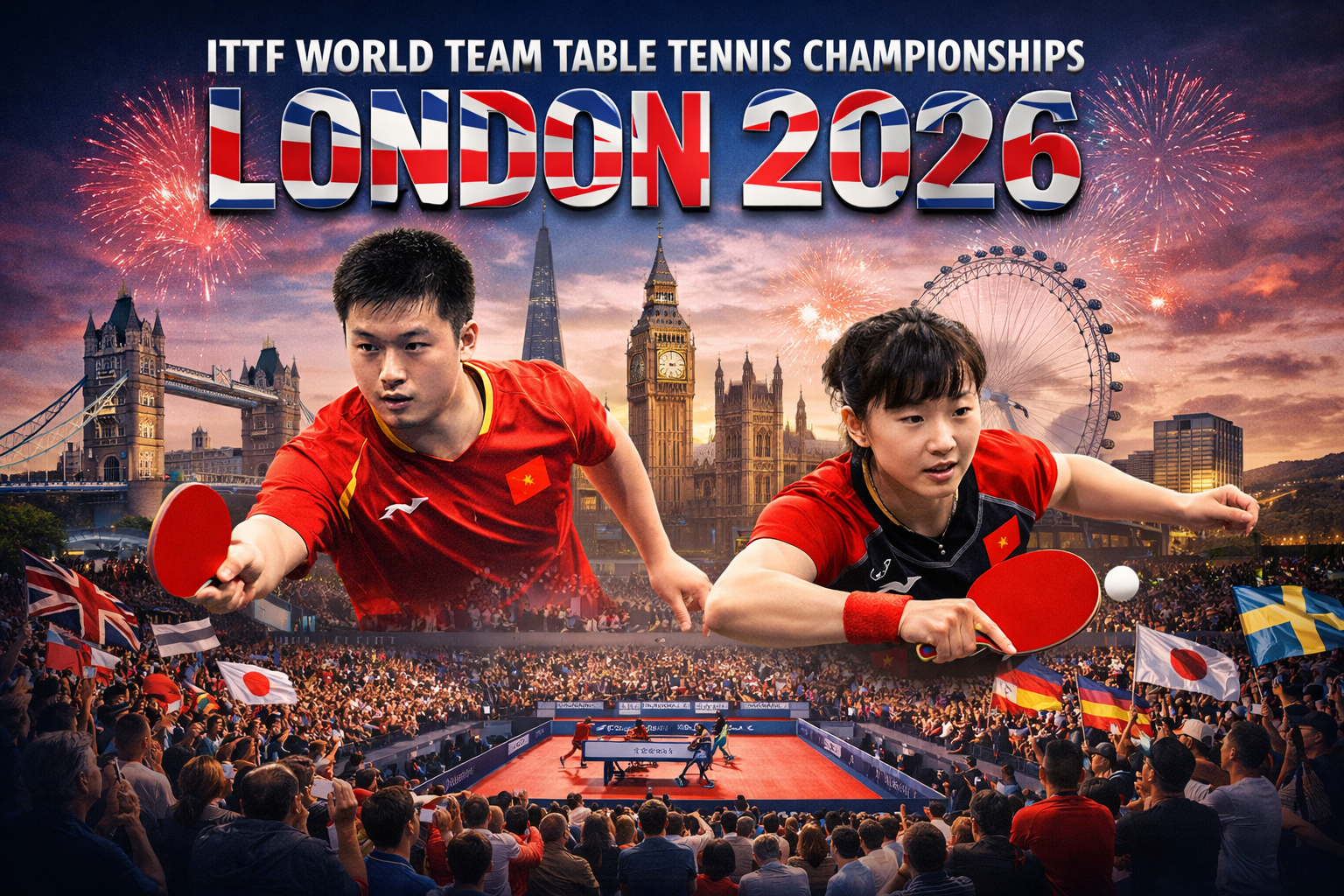
The ball is about to be struck in anger again in the city where it all began. The 2026 ITTF World Team Table Tennis Championships Finals, Presented by ACN, kick off today at the Copper Box Arena in London’s Queen Elizabeth Olympic Park, and they are not just another tournament, they are the centenary edition, returning to the exact city where the first World Championships unfolded in December 1926. As readers of our table tennis analysis and feature coverage know, rarely does a sporting event arrive with this much historical weight attached. But here is the thing: the past is only half the story. China’s men’s team has won 11 consecutive world titles going back to 2001. The women have won six straight and 23 of the last 24. The rest of the world has spent a quarter-century chasing shadows. In London, across 13 days at two iconic venues, they have their best shot yet at catching up, and the expanded 128-team format means more nations than ever will get a chance to try.
The Birth of a Sport: London 1926
The first World Table Tennis Championships was not planned as a global spectacle. It began almost accidentally. The International Table Tennis Federation was founded on 7 December 1926 at the Duke of York’s Room in Holborn, and the tournament billed as the “European Championships” was hurriedly renamed “World” because of the presence of Indian players studying in London. Seven men’s teams entered: Austria, Czechoslovakia, England, Germany, Hungary, India, and Wales. They played at four venues across the capital, including the Memorial Hall on Farringdon Street and the Herga Lawn Tennis Club in Harrow. Hungary won the first Swaythling Cup. Ivor Montagu, then just 22 years old, was elected ITTF chairman, a role he held for 40 years.
A century later, the numbers tell a story of staggering growth:
| Metric | 1926 | 2026 |
|---|---|---|
| Number of nations | 7 (men only) | 80 (men & women) |
| Total teams | 7 | 128 (64 men, 64 women) |
| Venues | 4 small halls | Copper Box Arena + OVO Arena Wembley |
| ITTF member nations | 9 | 226 |
| Prize for winning | Bragging rights | Swaythling/Corbillon Cup + global glory |
The first ball was struck at 7 p.m. on 6 December 1926 at the Herga Lawn Tennis Club, in a match between England and India. India won 5-4. The budget for the entire Championships was £352. Ivor Montagu personally covered a £150 deficit from a family legacy. One hundred years later, the tournament fills two of London’s premier arenas and is watched by millions worldwide.
The Chinese Dynasty: 25 Years of Near-Total Dominance
Let us get the numbers out of the way, because they are almost absurd. China’s men have won the Swaythling Cup 23 times in total, and the last 11 consecutively, from 2001 through 2024. The last team to beat them in a men’s final was Sweden, in Kuala Lumpur in 2000, when Jan-Ove Waldner, Jörgen Persson, and Peter Karlsson pulled off one final masterpiece. The women have been even more dominant: since 1975, they have lost the Corbillon Cup exactly twice, in 1991 (to a Unified Korea team) and in 2010 (to Singapore).
The all-time medal table for the World Championships underlines China’s supremacy:
| Nation | Total Championships Medals | Gold | Silver | Bronze |
|---|---|---|---|---|
| China | 440.5 | 162 | 106 | 172.5 |
| Hungary | 200.5 | 68 | 59 | 73.5 |
| Japan | 171 | 49 | 43 | 79 |
| Sweden | 43.5 | 15 | 13 | 15.5 |
| France | 27.5 | 2 | 3.5 | 22 |
| England | 97.5 | 14 | 26.5 | 57 |
But here is the critical context for London 2026: China’s squad is younger and less battle-tested than in recent memory. Fan Zhendong, arguably the greatest player of his generation, is not in the squad. Ma Long, the GOAT with 14 world titles, has retired from team competition. The Chinese men’s roster is led by world No. 1 Wang Chuqin and rising star Lin Shidong, but world No. 14 Wen Ruibo was left out in favour of world No. 23 Zhou Qihao. The depth is still formidable, but it is no longer infinite.
The Format: Bigger, More Complex, More Democratic
The 2026 edition has introduced a massively expanded format. Here is how it works:
- Stage 1B (28 April – 1 May, Copper Box Arena): 56 teams per gender split into 14 groups of four. The 14 group winners plus the six best second-placed teams advance directly to Stage 2. The remaining eight second-placed teams play a preliminary round for four more spots.
- Stage 1A (2–3 May, OVO Arena Wembley): The top seven ranked teams plus hosts England are drawn into two groups of four. This is a seeding round, all eight teams advance to Stage 2.
- Stage 2 (4–10 May, OVO Arena Wembley): A straight knockout bracket from the Round of 32 to the finals on 10 May. Each team match is best-of-five singles rubbers.
What this means in practice:
- More nations than ever get to compete on the biggest stage
- The expanded field creates more potential for early-round upsets
- Teams like Brazil (led by world No. 3 Hugo Calderano) and Denmark (world No. 16 Anders Lind) get a genuine path to the knockout rounds
- The format rewards depth over superstar power, no single player can carry a weak team through the gauntlet
🏓 London 2026 Full Schedule: Upcoming Events
Running from 28 April to 10 May 2026, this is the largest World Championships in history, featuring 64 men’s and 64 women’s teams competing across two iconic London venues. The tournament begins with Stage 1b at the Copper Box Arena (Queen Elizabeth Olympic Park), before moving to OVO Arena Wembley for the elite Stage 1a groups and the knockout Main Draw, culminating in the Women’s Final on 9 May and the Men’s Final on 10 May.
| Date | Stage / Round | Venue | Session Times (BST) | Details |
|---|---|---|---|---|
| Tue 28 Apr | Stage 1b – Group Matches (Day 1) | Copper Box Arena | Session 1: 10:00–16:00 Session 2: 17:00–23:00 | 56 teams across 14 groups compete in the first of 4 days of Stage 1b. Denmark men (world No. 15 Anders Lind) vs Mexico; Egypt women (Hana Goda) vs South Africa from 10:00. Wales women vs Nigeria at 17:00. Singapore women vs Trinidad & Tobago at 19:30. |
| Wed 29 Apr | Stage 1b – Group Matches (Day 2) | Copper Box Arena | Session 1: 10:00–16:00 Session 2: 17:00–23:00 | Australia men vs New Zealand men at 12:30. Wales women vs Uzbekistan at 19:30. Group matches continue across 12 tables. |
| Thu 30 Apr | Stage 1b – Group Matches (Day 3) | Copper Box Arena | Session 1: 10:00–16:00 Session 2: 17:00–23:00 | India men (2022 Commonwealth champions) vs Guatemala at 17:00. India women vs Rwanda at 17:00. |
| Fri 1 May | Stage 1b – Final Group Rounds & Preliminary KO | Copper Box Arena | Session 1: 10:00–16:00 Session 2: 17:00–late | Final women’s group rounds (morning). Preliminary knockout round for second-placed teams (evening). Wales women vs Australia at 12:30. 24 teams qualify for Stage 2. |
| Sat 2 May | Stage 1a – Elite Seeding Groups | OVO Arena Wembley | Sessions TBC | Top 7 seeded teams + hosts England compete to determine seeding. No elimination. |
| Sun 3 May | Stage 1a – Elite Seeding Groups | OVO Arena Wembley | Sessions TBC | Concludes seeding for the Main Draw. |
| Mon 4 May | Stage 2 – Round of 32 | OVO Arena Wembley | Sessions TBC | Knockout rounds begin. 32 teams (24 qualifiers from Stage 1b + 8 seeded from Stage 1a). |
| Tue 5 May | Stage 2 – Round of 32 (concludes) | OVO Arena Wembley | Sessions TBC | Remaining Round of 32 matches. |
| Wed 6 May | Stage 2 – Round of 16 | OVO Arena Wembley | Sessions TBC | Knockout continues. |
| Thu 7 May | Stage 2 – Quarterfinals | OVO Arena Wembley | Sessions TBC | Women’s & Men’s quarterfinal matches. |
| Fri 8 May | Stage 2 – Quarterfinals & Semifinals | OVO Arena Wembley | Sessions TBC | Remaining QFs and first semifinal matches. |
| Sat 9 May | Stage 2 – Semifinals & Women’s Final | OVO Arena Wembley | Women’s Final: 13:00 | Women’s Semifinals (morning) followed by the Women’s Team Final at 13:00. |
| Sun 10 May | Stage 2 – Men’s Final | OVO Arena Wembley | Men’s Final: 13:00 | The Men’s Team Final at 13:00, closing the championships. |
Key Notes
- Venues: Copper Box Arena (Queen Elizabeth Olympic Park, London E20) — 28 Apr to 1 May; OVO Arena Wembley (London HA9 0AA) — 2 to 10 May.
- Session times for Stage 1a and Stage 2 at OVO Arena Wembley are yet to be confirmed in detail; matches run from late morning through evening each day.
- Tickets: Copper Box starts from £15 adults / £5 children per session (via Ticketmaster). OVO Arena Wembley tickets via AXS and Ticketmaster (Wembley Event Pass covers all sessions 2–10 May).
- Champions: China are the defending champions in both the men’s (Swaythling Cup) and women’s (Corbillon Cup) events.
Sources: Table Tennis England, tabtennisworld.com, Olympics.com, ITTF official calendar, Wikipedia.
Who Can Actually Win This Thing?
China enters as the favourite in both events. But the gap has narrowed. Here are the legitimate challengers.
Men’s team
- France: Olympic bronze medallists and 2024 world silver medallists. The Lebrun brothers, Felix (world No. 6) and Alexis (world No. 11), are the most exciting young pairing in the sport. Felix, still only 19, plays at a speed that unsettles even Chinese veterans. All five French players are inside the world top 30.
- Japan: Led by world No. 4 Tomokazu Harimoto and world No. 7 Sora Matsushima. Japan has three players in the top 20 and a deep bench. They have contested the last five women’s finals with China and are desperate to break through on the men’s side too.
- Sweden: Olympic silver medallists from Paris 2024. World No. 2 Truls Möregårdh is capable of beating anyone on a given day. The Karlsson brothers (Mattias and Kristian) and Anton Källberg provide proven support.
- Germany: Always dangerous. Dang Qiu (world No. 10), Benedikt Duda, and Patrick Franziska give them three top-20 players. Dimitrij Ovtcharov, now 37, is chasing one last medal.
Women’s team
- Japan: The strongest challengers by a mile. Miwa Harimoto (world No. 6) has been in stunning form, winning WTT Star Contender London just weeks ago. Hina Hayata (world No. 11), Honoka Hashimoto (world No. 14), and Miyu Nagasaki (world No. 16) give Japan four top-20 players. The surprise omission of Mima Ito and Satsuki Odo has actually created a younger, more dynamic squad.
- Germany: Sabine Winter (world No. 9) and Ying Han (world No. 19) lead a veteran squad that could cause problems in the knockout stages.
- Korea Republic: Olympic bronze medallists but with significant squad turnover. Shin Yubin (world No. 12) is the only constant from 2024.
The Globalisation Story: Six Teams Making History
One of the most heartwarming narratives of London 2026 is the sheer breadth of participation. For the first time, six nations are making their World Team Championships debut:
- Cook Islands women (population: 15,000)
- Fiji men (who sent 62-year-old former shark diver Stephen Reilly to the 2022 Commonwealth Games)
- Côte d’Ivoire men (ranked No. 49, first-ever team qualification)
- Angola women (a nation of 36 million sending its first women’s team)
- Democratic Republic of Congo women (population 114 million on the biggest stage)
- Nauru women (the third-smallest country in the world, at 21 square kilometres)
As Table Tennis England notes, “Altogether, 80 nations will be represented in London, 48 in both competitions, 16 only in the men’s, and 16 only in the women’s.” That is more nations than appeared in the entire first 50 years of the World Championships combined.
The Venues: From Copper Box to Wembley
The tournament unfolds across two venues that represent different eras of London’s sporting architecture:
- Copper Box Arena: Built for the London 2012 Olympics in Queen Elizabeth Olympic Park. It hosts Stage 1B and the preliminary rounds. Intimate, energetic, and accessible, tickets are just £5 for children and £15 for adults.
- OVO Arena Wembley: The iconic Wembley venue, home to everything from concerts to Olympic boxing. It hosts Stage 1A, the entire knockout Stage 2, and both finals on 10 May.
The move from Copper Box to Wembley mid-tournament creates a genuine sense of progression. Teams that survive Stage 1B earn the right to walk onto the Wembley floor. It is a brilliant piece of tournament design.
What the Centenary Really Means
The 100-year milestone is more than a round number. It forces the sport to reckon with its own evolution. Table tennis in 1926 was played with wooden bats and a net made of string stretched across a dining table. The ball was made of celluloid. The rules were still being invented as the tournament went on. Today, the sport has 226 member federations, Olympic status, and professional circuits that span the globe.
But the centenary also arrives at a moment of uncertainty for the sport’s elite. The ITTF is navigating a complex relationship with World Table Tennis, the commercial entity that now runs the professional tour. Equipment regulations continue to evolve, the recent debate over plastic ball specifications and glue bans has split opinion. And the question of whether table tennis can sustain its Olympic relevance in a crowded summer Games programme is never far from the conversation.
A successful, well-attended, globally diverse World Championship in London, the sport’s spiritual birthplace, sends exactly the right message. As ITTF President Petra Sörling has said, the aim is for this edition to “celebrate the past while building the future.”
The Bottom Line
The 2026 World Team Championships are the most important in a century because they are the place where the past and future of table tennis collide. The centenary celebration honours everything that came before, the wooden bats and celluloid balls, the Hungarian dynasties and Swedish revolutions, the rise of China and the spread of the sport to every continent on earth. But the competition itself is about what comes next.
Can France or Japan finally break China’s men’s stranglehold? Can Miwa Harimoto lead Japan past Sun Yingsha and the Chinese women’s juggernaut? Will a team from Africa, the Americas, or Oceania make a run that captures the world’s imagination?
By the time the finals conclude on 10 May at OVO Arena Wembley, we will have answers. And whether China extends its streak or history is made in the form of a new champion, one thing is certain: the next 100 years of table tennis start in London.
Table Tennis has never been more popular, here’s looking forward to this London event elevating the sport even further.
Contact Details
- Official Website: ITTF World Team Championships London 2026
- Ticketing: Table Tennis England, London 2026 Tickets
- Live Stream & Results: World Table Tennis
- Social Media:
- Physical Address: ITTF Headquarters, Chemin de la Roche 11, 1020 Renens, Switzerland
Who is the TT GOAT? | 100 Years of Table Tennis
Released by the ITTF just days before the centenary Championships, this documentary explores the greatest players across 100 years of table tennis history, from Viktor Barna to Ma Long, from Angelica Rozeanu to Sun Yingsha. It sets the perfect mood for a tournament that celebrates a century of the sport.
Featured Articles
Dive into in-depth stories, exclusive interviews, and expert advice from the world of table tennis. Discover strategies, player spotlights, and behind-the-scenes insights.

Ping Pong Revolution: How Table Tennis Transforms Homes, Offices, and Communities
Table tennis is uniquely positioned as one of the most versatile recreational activities available today. This comprehensive article explores the transformative impact of ping pong across three …
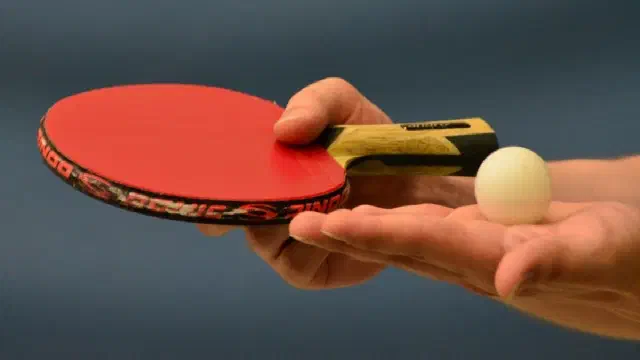
Basic Equipment Needed to Play Table Tennis
What is the basic equipment that you need to get started with playing ping pong? Our guide to the very basic table tennis equipment required to go ahead and start to play. A guide to the basics of …
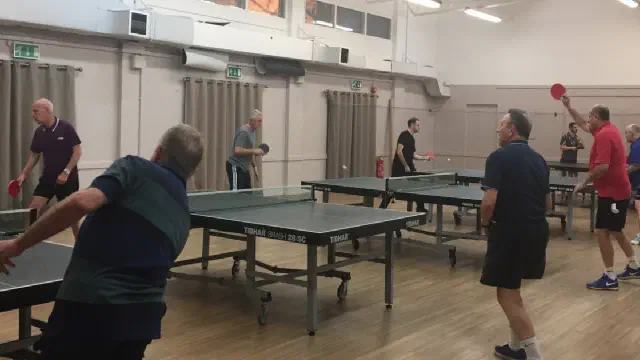
Is Ping Pong Good Exercise? The Top Health Benefits Explained
Table tennis is great exercise both for mind and body. You can use ping pong to keep fit alongside other exercise programs and raise your overall activity levels to lose weight and keep your mind …

Ping Pong Revolution: How Table Tennis Transforms Homes, Offices, and Communities
Table tennis is uniquely positioned as one of the most versatile recreational activities …

Basic Equipment Needed to Play Table Tennis
What is the basic equipment that you need to get started with playing ping pong? Our guide …
Is Ping Pong Good Exercise? The Top Health Benefits Explained
Table tennis is great exercise both for mind and body. You can use ping pong to keep fit …